DP3
Public Types | Public Member Functions | List of all members
dp3::common::ParameterSet Class Reference

Implements a map of Key-Value pairs. More...

#include <ParameterSet.h>

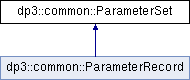
Inheritance diagram for dp3::common::ParameterSet:
dp3::common::ParameterRecord

Public Types

typedef ParameterSetImpl::const_iterator const_iterator
 
typedef ParameterSetImpl::iterator iterator
 

Public Member Functions

 ParameterSet (const ParameterSet &that)
 Copying is allowed. More...
 
 ParameterSet (const std::string &theFilename, bool caseInsensitive)
 
iterator begin ()
 Iteration. More...
 
const_iterator begin () const
 
void clear ()
 Clear the set. More...
 
bool empty () const
 Is the set empty? More...
 
iterator end ()
 
const_iterator end () const
 
KeyCompare::Mode keyCompareMode () const
 Key comparison mode. More...
 
ParameterSetoperator= (const ParameterSet &that)
 Copying is allowed. More...
 
int size () const
 Get the number of parameters. More...
 
std::vector< std::string > unusedKeys () const
 
Construction and Destruction

A ParameterSet can be constructed as empty collection, can be read from a file or copied from another collection.

 ParameterSet (KeyCompare::Mode mode=KeyCompare::NORMAL)
 
 ParameterSet (bool caseInsensitive)
 
 ParameterSet (const std::string &theFilename, KeyCompare::Mode=KeyCompare::NORMAL)
 
 ParameterSet (const char *theFilename, KeyCompare::Mode=KeyCompare::NORMAL)
 This one is needed to avoid problems with the bool constructor above. More...
 
const ParameterValueget (const std::string &aKey) const
 
const ParameterValueoperator[] (const std::string &aKey) const
 
Merging or appending collections

An existing collection can be extended/merged with another collection.

void adoptFile (const std::string &theFilename, const std::string &thePrefix="")
 
void adoptBuffer (const std::string &theBuffer, const std::string &thePrefix="")
 
void adoptCollection (const ParameterSet &theCollection, const std::string &thePrefix="")
 
void adoptArguments (const std::vector< std::string > &arguments)
 
Saving the collection

The map of key-value pair can be saved in a file or a string.

void writeFile (const std::string &theFilename, bool append=false) const
 Writes the Key-Values pair from the current ParCollection to the file. More...
 
void writeBuffer (std::string &theBuffer) const
 
void writeStream (std::ostream &os) const
 
Handle subsets

A subset from the current collection can be made based on the prefix of the keys in the collection.

ParameterSet makeSubset (const std::string &baseKey, const std::string &prefix="") const
 
void subtractSubset (const std::string &fullPrefix)
 
Handling single key-value pairs

Single key-value pairs can ofcourse be added, replaced or removed from a collection.

void add (const std::string &aKey, const std::string &aValue)
 
void add (const KVpair &aPair)
 
void replace (const std::string &aKey, const std::string &aValue)
 
void replace (const KVpair &aPair)
 
void remove (const std::string &aKey)
 Removes the pair with the given key. Removing a non-existing key is ok. More...
 
Searching and retrieving

The following functions support searching the collection for existance of given keys an the retrieval of the corresponding value. In the getXxx retrieve functions the stored string-value is converted to the wanted type.

iterator find (const std::string &searchKey)
 Find a key. More...
 
const_iterator find (const std::string &searchKey) const
 
bool isDefined (const std::string &searchKey) const
 Checks if the given Key is defined in the ParameterSet. More...
 
std::string locateModule (const std::string &shortName) const
 
std::string fullModuleName (const std::string &shortName) const
 
std::vector< ParameterValuegetVector (const std::string &aKey) const
 
ParameterRecord getRecord (const std::string &aKey) const
 
bool getBool (const std::string &aKey) const
 
bool getBool (const std::string &aKey, bool aValue) const
 
int getInt (const std::string &aKey) const
 
int getInt (const std::string &aKey, int aValue) const
 
unsigned int getUint (const std::string &aKey) const
 
unsigned int getUint (const std::string &aKey, unsigned int aValue) const
 
int16_t getInt16 (const std::string &aKey) const
 
int16_t getInt16 (const std::string &aKey, int16_t aValue) const
 
uint16_t getUint16 (const std::string &aKey) const
 
uint16_t getUint16 (const std::string &aKey, uint16_t aValue) const
 
int32_t getInt32 (const std::string &aKey) const
 
int32_t getInt32 (const std::string &aKey, int32_t aValue) const
 
uint32_t getUint32 (const std::string &aKey) const
 
uint32_t getUint32 (const std::string &aKey, uint32_t aValue) const
 
int64_t getInt64 (const std::string &aKey) const
 
int64_t getInt64 (const std::string &aKey, int64_t aValue) const
 
uint64_t getUint64 (const std::string &aKey) const
 
uint64_t getUint64 (const std::string &aKey, uint64_t aValue) const
 
float getFloat (const std::string &aKey) const
 
float getFloat (const std::string &aKey, float aValue) const
 
double getDouble (const std::string &aKey) const
 
double getDouble (const std::string &aKey, double aValue) const
 
std::string getString (const std::string &aKey) const
 
std::string getString (const std::string &aKey, const std::string &aValue) const
 
time_t getTime (const std::string &aKey) const
 
time_t getTime (const std::string &aKey, const time_t &aValue) const
 
std::vector< bool > getBoolVector (const std::string &aKey, bool expandable=false) const
 
std::vector< bool > getBoolVector (const std::string &aKey, const std::vector< bool > &aValue, bool expandable=false) const
 
std::vector< int > getIntVector (const std::string &aKey, bool expandable=false) const
 
std::vector< int > getIntVector (const std::string &aKey, const std::vector< int > &aValue, bool expandable=false) const
 
std::vector< unsigned int > getUintVector (const std::string &aKey, bool expandable=false) const
 
std::vector< unsigned int > getUintVector (const std::string &aKey, const std::vector< unsigned int > &aValue, bool expandable=false) const
 
std::vector< int16_t > getInt16Vector (const std::string &aKey, bool expandable=false) const
 
std::vector< int16_t > getInt16Vector (const std::string &aKey, const std::vector< int16_t > &aValue, bool expandable=false) const
 
std::vector< uint16_t > getUint16Vector (const std::string &aKey, bool expandable=false) const
 
std::vector< uint16_t > getUint16Vector (const std::string &aKey, const std::vector< uint16_t > &aValue, bool expandable=false) const
 
std::vector< int32_t > getInt32Vector (const std::string &aKey, bool expandable=false) const
 
std::vector< int32_t > getInt32Vector (const std::string &aKey, const std::vector< int32_t > &aValue, bool expandable=false) const
 
std::vector< uint32_t > getUint32Vector (const std::string &aKey, bool expandable=false) const
 
std::vector< uint32_t > getUint32Vector (const std::string &aKey, const std::vector< uint32_t > &aValue, bool expandable=false) const
 
std::vector< int64_t > getInt64Vector (const std::string &aKey, bool expandable=false) const
 
std::vector< int64_t > getInt64Vector (const std::string &aKey, const std::vector< int64_t > &aValue, bool expandable=false) const
 
std::vector< uint64_t > getUint64Vector (const std::string &aKey, bool expandable=false) const
 
std::vector< uint64_t > getUint64Vector (const std::string &aKey, const std::vector< uint64_t > &aValue, bool expandable=false) const
 
std::vector< size_t > getSizeTVector (const std::string &aKey, bool expandable=false) const
 
std::vector< float > getFloatVector (const std::string &aKey, bool expandable=false) const
 
std::vector< float > getFloatVector (const std::string &aKey, const std::vector< float > &aValue, bool expandable=false) const
 
std::vector< double > getDoubleVector (const std::string &aKey, bool expandable=false) const
 
std::vector< double > getDoubleVector (const std::string &aKey, const std::vector< double > &aValue, bool expandable=false) const
 
std::vector< std::string > getStringVector (const std::string &aKey, bool expandable=false) const
 
std::vector< std::string > getStringVector (const std::string &aKey, const std::vector< std::string > &aValue, bool expandable=false) const
 
std::vector< time_t > getTimeVector (const std::string &aKey, bool expandable=false) const
 
std::vector< time_t > getTimeVector (const std::string &aKey, const std::vector< time_t > &aValue, bool expandable=false) const
 

Friends

Printing

Mostly for debug purposes the collection can be printed.

std::ostream & operator<< (std::ostream &os, const ParameterSet &thePS)
 Allow printing the whole parameter collection. More...
 

Detailed Description

Implements a map of Key-Value pairs.

The ParameterSet class is a key-value implementation of the type map<string, string>. This means that values are stored as a string which allows easy merging and splitting of ParameterSets because no conversions have to be done. A couple of getXxx routines are provided to convert the strings to the desired type.

Member Typedef Documentation

◆ const_iterator

◆ iterator

Constructor & Destructor Documentation

◆ ParameterSet() [1/6]

dp3::common::ParameterSet::ParameterSet ( KeyCompare::Mode  mode = KeyCompare::NORMAL)
explicit

Create an empty collection. The optional argument mode determines how keys should be compared.

◆ ParameterSet() [2/6]

dp3::common::ParameterSet::ParameterSet ( bool  caseInsensitive)
explicit

Create an empty collection.

Parameters
caseInsensitiveIf keys have to be compared case-insensitive.

◆ ParameterSet() [3/6]

dp3::common::ParameterSet::ParameterSet ( const std::string &  theFilename,
KeyCompare::Mode  = KeyCompare::NORMAL 
)
explicit

Construct a ParameterSet from the contents of theFilename. The optional argument mode determines how keys should be compared.

◆ ParameterSet() [4/6]

dp3::common::ParameterSet::ParameterSet ( const char *  theFilename,
KeyCompare::Mode  = KeyCompare::NORMAL 
)
explicit

This one is needed to avoid problems with the bool constructor above.

◆ ParameterSet() [5/6]

dp3::common::ParameterSet::ParameterSet ( const std::string &  theFilename,
bool  caseInsensitive 
)
explicit

Construct a ParameterSet from the contents of theFilename.

Parameters
caseInsensitiveIf keys have to be compared case-insensitive.

◆ ParameterSet() [6/6]

dp3::common::ParameterSet::ParameterSet ( const ParameterSet that)

Copying is allowed.

Member Function Documentation

◆ add() [1/2]

void dp3::common::ParameterSet::add ( const KVpair aPair)
inline

◆ add() [2/2]

void dp3::common::ParameterSet::add ( const std::string &  aKey,
const std::string &  aValue 
)
inline

Add the given pair to the collection. When the aKey already exist in the collection an exception is thrown.

◆ adoptArguments()

void dp3::common::ParameterSet::adoptArguments ( const std::vector< std::string > &  arguments)
inline

Adds the Key-Values pairs in the argument list. It ignores arguments not having the Key=Value syntax.

◆ adoptBuffer()

void dp3::common::ParameterSet::adoptBuffer ( const std::string &  theBuffer,
const std::string &  thePrefix = "" 
)
inline

Adds the Key-Values pair in the given buffer to the current collection. Each key will be prefixed with the optional argument thePrefix.
Note that no dot is added to the prefix.

◆ adoptCollection()

void dp3::common::ParameterSet::adoptCollection ( const ParameterSet theCollection,
const std::string &  thePrefix = "" 
)
inline

Adds the Key-Values pair in the given collection to the current collection. Each key will be prefixed with the optional argument thePrefix.
Note that no dot is added to the prefix.
If theCollection is this collection, nothing will be done.

◆ adoptFile()

void dp3::common::ParameterSet::adoptFile ( const std::string &  theFilename,
const std::string &  thePrefix = "" 
)
inline

Adds the Key-Values pair in the given file to the current collection. Each key will be prefixed with the optional argument thePrefix.
Note that no dot is added to the prefix.

◆ begin() [1/2]

ParameterSet::iterator dp3::common::ParameterSet::begin ( )
inline

Iteration.

◆ begin() [2/2]

ParameterSet::const_iterator dp3::common::ParameterSet::begin ( ) const
inline

◆ clear()

void dp3::common::ParameterSet::clear ( )
inline

Clear the set.

◆ empty()

bool dp3::common::ParameterSet::empty ( ) const
inline

Is the set empty?

◆ end() [1/2]

ParameterSet::iterator dp3::common::ParameterSet::end ( )
inline

◆ end() [2/2]

ParameterSet::const_iterator dp3::common::ParameterSet::end ( ) const
inline

◆ find() [1/2]

ParameterSet::iterator dp3::common::ParameterSet::find ( const std::string &  searchKey)
inline

Find a key.

◆ find() [2/2]

ParameterSet::const_iterator dp3::common::ParameterSet::find ( const std::string &  searchKey) const
inline

◆ fullModuleName()

std::string dp3::common::ParameterSet::fullModuleName ( const std::string &  shortName) const
inline

Searches the module name or module hierarchy and returns its fullposition. e.g: a.b.c.d.param=xxxx --> fullModuleName(d)-->a.b.c.d e.g: a.b.c.d.param=xxxx --> fullModuleName(b.c)-->a.b.c

◆ get()

const ParameterValue & dp3::common::ParameterSet::get ( const std::string &  aKey) const
inline

Get the ParameterValue.

◆ getBool() [1/2]

bool dp3::common::ParameterSet::getBool ( const std::string &  aKey) const
inline

Return scalar value.

◆ getBool() [2/2]

bool dp3::common::ParameterSet::getBool ( const std::string &  aKey,
bool  aValue 
) const
inline

◆ getBoolVector() [1/2]

std::vector< bool > dp3::common::ParameterSet::getBoolVector ( const std::string &  aKey,
bool  expandable = false 
) const
inline

Return vector of values.

◆ getBoolVector() [2/2]

std::vector< bool > dp3::common::ParameterSet::getBoolVector ( const std::string &  aKey,
const std::vector< bool > &  aValue,
bool  expandable = false 
) const
inline

◆ getDouble() [1/2]

double dp3::common::ParameterSet::getDouble ( const std::string &  aKey) const
inline

◆ getDouble() [2/2]

double dp3::common::ParameterSet::getDouble ( const std::string &  aKey,
double  aValue 
) const
inline

◆ getDoubleVector() [1/2]

std::vector< double > dp3::common::ParameterSet::getDoubleVector ( const std::string &  aKey,
bool  expandable = false 
) const
inline

◆ getDoubleVector() [2/2]

std::vector< double > dp3::common::ParameterSet::getDoubleVector ( const std::string &  aKey,
const std::vector< double > &  aValue,
bool  expandable = false 
) const
inline

◆ getFloat() [1/2]

float dp3::common::ParameterSet::getFloat ( const std::string &  aKey) const
inline

◆ getFloat() [2/2]

float dp3::common::ParameterSet::getFloat ( const std::string &  aKey,
float  aValue 
) const
inline

◆ getFloatVector() [1/2]

std::vector< float > dp3::common::ParameterSet::getFloatVector ( const std::string &  aKey,
bool  expandable = false 
) const
inline

◆ getFloatVector() [2/2]

std::vector< float > dp3::common::ParameterSet::getFloatVector ( const std::string &  aKey,
const std::vector< float > &  aValue,
bool  expandable = false 
) const
inline

◆ getInt() [1/2]

int dp3::common::ParameterSet::getInt ( const std::string &  aKey) const
inline

◆ getInt() [2/2]

int dp3::common::ParameterSet::getInt ( const std::string &  aKey,
int  aValue 
) const
inline

◆ getInt16() [1/2]

int16_t dp3::common::ParameterSet::getInt16 ( const std::string &  aKey) const
inline

◆ getInt16() [2/2]

int16_t dp3::common::ParameterSet::getInt16 ( const std::string &  aKey,
int16_t  aValue 
) const
inline

◆ getInt16Vector() [1/2]

std::vector< int16_t > dp3::common::ParameterSet::getInt16Vector ( const std::string &  aKey,
bool  expandable = false 
) const
inline

◆ getInt16Vector() [2/2]

std::vector< int16_t > dp3::common::ParameterSet::getInt16Vector ( const std::string &  aKey,
const std::vector< int16_t > &  aValue,
bool  expandable = false 
) const
inline

◆ getInt32() [1/2]

int32_t dp3::common::ParameterSet::getInt32 ( const std::string &  aKey) const
inline

◆ getInt32() [2/2]

int32_t dp3::common::ParameterSet::getInt32 ( const std::string &  aKey,
int32_t  aValue 
) const
inline

◆ getInt32Vector() [1/2]

std::vector< int32_t > dp3::common::ParameterSet::getInt32Vector ( const std::string &  aKey,
bool  expandable = false 
) const
inline

◆ getInt32Vector() [2/2]

std::vector< int32_t > dp3::common::ParameterSet::getInt32Vector ( const std::string &  aKey,
const std::vector< int32_t > &  aValue,
bool  expandable = false 
) const
inline

◆ getInt64() [1/2]

int64_t dp3::common::ParameterSet::getInt64 ( const std::string &  aKey) const
inline

◆ getInt64() [2/2]

int64_t dp3::common::ParameterSet::getInt64 ( const std::string &  aKey,
int64_t  aValue 
) const
inline

◆ getInt64Vector() [1/2]

std::vector< int64_t > dp3::common::ParameterSet::getInt64Vector ( const std::string &  aKey,
bool  expandable = false 
) const
inline

◆ getInt64Vector() [2/2]

std::vector< int64_t > dp3::common::ParameterSet::getInt64Vector ( const std::string &  aKey,
const std::vector< int64_t > &  aValue,
bool  expandable = false 
) const
inline

◆ getIntVector() [1/2]

std::vector< int > dp3::common::ParameterSet::getIntVector ( const std::string &  aKey,
bool  expandable = false 
) const
inline

◆ getIntVector() [2/2]

std::vector< int > dp3::common::ParameterSet::getIntVector ( const std::string &  aKey,
const std::vector< int > &  aValue,
bool  expandable = false 
) const
inline

◆ getRecord()

ParameterRecord dp3::common::ParameterSet::getRecord ( const std::string &  aKey) const

Return the value of the key as a parameter record. This can only be done if the value is enclosed in curly braces.

◆ getSizeTVector()

std::vector<size_t> dp3::common::ParameterSet::getSizeTVector ( const std::string &  aKey,
bool  expandable = false 
) const
inline

◆ getString() [1/2]

std::string dp3::common::ParameterSet::getString ( const std::string &  aKey) const
inline

◆ getString() [2/2]

std::string dp3::common::ParameterSet::getString ( const std::string &  aKey,
const std::string &  aValue 
) const
inline

◆ getStringVector() [1/2]

std::vector< std::string > dp3::common::ParameterSet::getStringVector ( const std::string &  aKey,
bool  expandable = false 
) const
inline

◆ getStringVector() [2/2]

std::vector< std::string > dp3::common::ParameterSet::getStringVector ( const std::string &  aKey,
const std::vector< std::string > &  aValue,
bool  expandable = false 
) const
inline

◆ getTime() [1/2]

time_t dp3::common::ParameterSet::getTime ( const std::string &  aKey) const
inline

Returns the value as a time value (seconds since 1970).

◆ getTime() [2/2]

time_t dp3::common::ParameterSet::getTime ( const std::string &  aKey,
const time_t &  aValue 
) const
inline

◆ getTimeVector() [1/2]

std::vector< time_t > dp3::common::ParameterSet::getTimeVector ( const std::string &  aKey,
bool  expandable = false 
) const
inline

◆ getTimeVector() [2/2]

std::vector< time_t > dp3::common::ParameterSet::getTimeVector ( const std::string &  aKey,
const std::vector< time_t > &  aValue,
bool  expandable = false 
) const
inline

◆ getUint() [1/2]

unsigned int dp3::common::ParameterSet::getUint ( const std::string &  aKey) const
inline

◆ getUint() [2/2]

unsigned int dp3::common::ParameterSet::getUint ( const std::string &  aKey,
unsigned int  aValue 
) const
inline

◆ getUint16() [1/2]

uint16_t dp3::common::ParameterSet::getUint16 ( const std::string &  aKey) const
inline

◆ getUint16() [2/2]

uint16_t dp3::common::ParameterSet::getUint16 ( const std::string &  aKey,
uint16_t  aValue 
) const
inline

◆ getUint16Vector() [1/2]

std::vector< uint16_t > dp3::common::ParameterSet::getUint16Vector ( const std::string &  aKey,
bool  expandable = false 
) const
inline

◆ getUint16Vector() [2/2]

std::vector< uint16_t > dp3::common::ParameterSet::getUint16Vector ( const std::string &  aKey,
const std::vector< uint16_t > &  aValue,
bool  expandable = false 
) const
inline

◆ getUint32() [1/2]

uint32_t dp3::common::ParameterSet::getUint32 ( const std::string &  aKey) const
inline

◆ getUint32() [2/2]

uint32_t dp3::common::ParameterSet::getUint32 ( const std::string &  aKey,
uint32_t  aValue 
) const
inline

◆ getUint32Vector() [1/2]

std::vector< uint32_t > dp3::common::ParameterSet::getUint32Vector ( const std::string &  aKey,
bool  expandable = false 
) const
inline

◆ getUint32Vector() [2/2]

std::vector< uint32_t > dp3::common::ParameterSet::getUint32Vector ( const std::string &  aKey,
const std::vector< uint32_t > &  aValue,
bool  expandable = false 
) const
inline

◆ getUint64() [1/2]

uint64_t dp3::common::ParameterSet::getUint64 ( const std::string &  aKey) const
inline

◆ getUint64() [2/2]

uint64_t dp3::common::ParameterSet::getUint64 ( const std::string &  aKey,
uint64_t  aValue 
) const
inline

◆ getUint64Vector() [1/2]

std::vector< uint64_t > dp3::common::ParameterSet::getUint64Vector ( const std::string &  aKey,
bool  expandable = false 
) const
inline

◆ getUint64Vector() [2/2]

std::vector< uint64_t > dp3::common::ParameterSet::getUint64Vector ( const std::string &  aKey,
const std::vector< uint64_t > &  aValue,
bool  expandable = false 
) const
inline

◆ getUintVector() [1/2]

std::vector< unsigned int > dp3::common::ParameterSet::getUintVector ( const std::string &  aKey,
bool  expandable = false 
) const
inline

◆ getUintVector() [2/2]

std::vector< unsigned int > dp3::common::ParameterSet::getUintVector ( const std::string &  aKey,
const std::vector< unsigned int > &  aValue,
bool  expandable = false 
) const
inline

◆ getVector()

std::vector< ParameterValue > dp3::common::ParameterSet::getVector ( const std::string &  aKey) const
inline

Return the value of the key as a vector of values. This can only be done if the value is enclosed in square brackets.

◆ isDefined()

bool dp3::common::ParameterSet::isDefined ( const std::string &  searchKey) const
inline

Checks if the given Key is defined in the ParameterSet.

◆ keyCompareMode()

KeyCompare::Mode dp3::common::ParameterSet::keyCompareMode ( ) const
inline

Key comparison mode.

◆ locateModule()

std::string dp3::common::ParameterSet::locateModule ( const std::string &  shortName) const
inline

Searches for a module whose name end in the given modulename. e.g: a.b.c.d.param=xxxx --> locateModule(d)-->a.b.c.

◆ makeSubset()

ParameterSet dp3::common::ParameterSet::makeSubset ( const std::string &  baseKey,
const std::string &  prefix = "" 
) const
inline

Creates a subset from the current ParameterSet containing all the parameters that start with the given baseKey. The baseKey is cut off from the Keynames in the created subset, the optional prefix is put before all keys in the subset.
It is important to note that no dot is added to the prefix, so it has to be given explicitly. So when giving a prefix like "pre", a key "pre.key" gets ".key" and "prefix.key" get "fix.key".

◆ operator=()

ParameterSet& dp3::common::ParameterSet::operator= ( const ParameterSet that)

Copying is allowed.

◆ operator[]()

const ParameterValue & dp3::common::ParameterSet::operator[] ( const std::string &  aKey) const
inline

◆ remove()

void dp3::common::ParameterSet::remove ( const std::string &  aKey)
inline

Removes the pair with the given key. Removing a non-existing key is ok.

◆ replace() [1/2]

void dp3::common::ParameterSet::replace ( const KVpair aPair)
inline

◆ replace() [2/2]

void dp3::common::ParameterSet::replace ( const std::string &  aKey,
const std::string &  aValue 
)
inline

Replaces the given pair in the collection. If aKey does not exist in the collection the pair is just added to the collection.

◆ size()

int dp3::common::ParameterSet::size ( ) const
inline

Get the number of parameters.

◆ subtractSubset()

void dp3::common::ParameterSet::subtractSubset ( const std::string &  fullPrefix)
inline

Subtract a subset from the current ParameterSet. Every parameter whose key starts with the given name will be removed from the ParameterSet.
Similarly to makeSubset, no dot is added to the prefix.

◆ unusedKeys()

std::vector< std::string > dp3::common::ParameterSet::unusedKeys ( ) const
inline

Get all unused parameter names, thus the names of parameters that have not been asked for.

◆ writeBuffer()

void dp3::common::ParameterSet::writeBuffer ( std::string &  theBuffer) const
inline

Writes the Key-Values pair from the current ParCollection to the string buffer.

◆ writeFile()

void dp3::common::ParameterSet::writeFile ( const std::string &  theFilename,
bool  append = false 
) const
inline

Writes the Key-Values pair from the current ParCollection to the file.

◆ writeStream()

void dp3::common::ParameterSet::writeStream ( std::ostream &  os) const
inline

Writes the Key-Values pair from the current ParCollection to the output stream.

Friends And Related Function Documentation

◆ operator<<

std::ostream& operator<< ( std::ostream &  os,
const ParameterSet thePS 
)
friend

Allow printing the whole parameter collection.


The documentation for this class was generated from the following file: